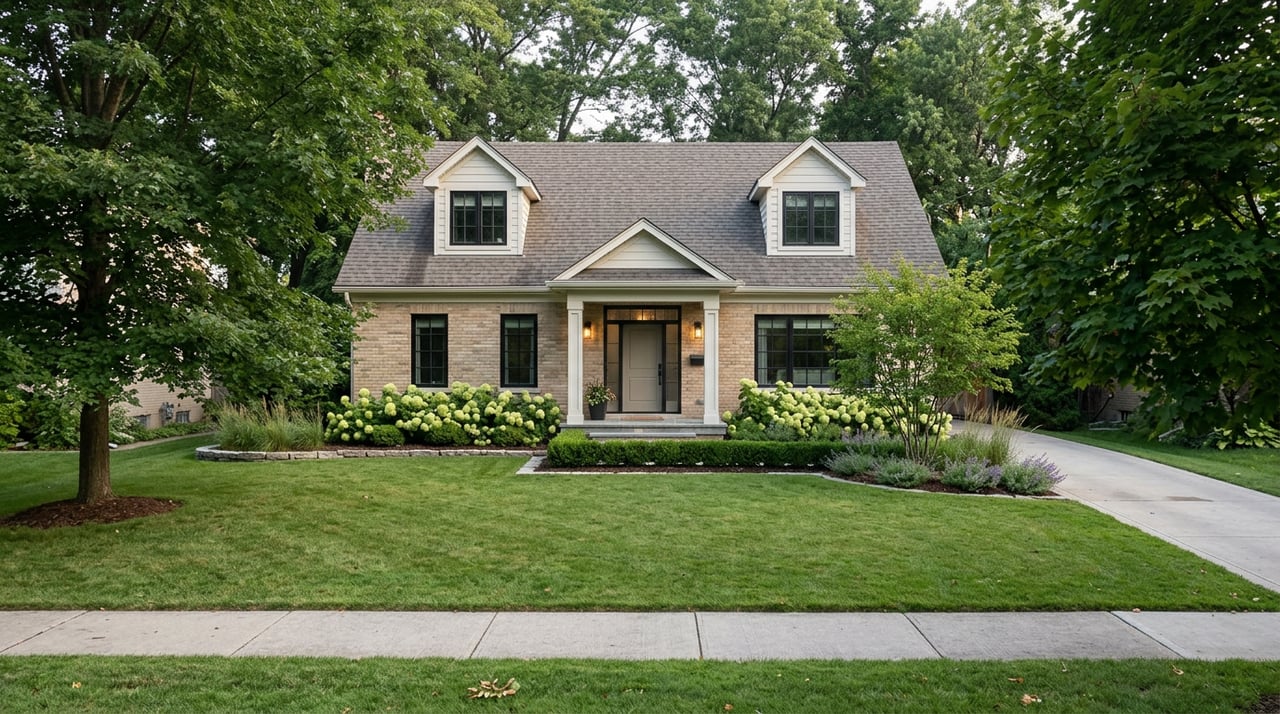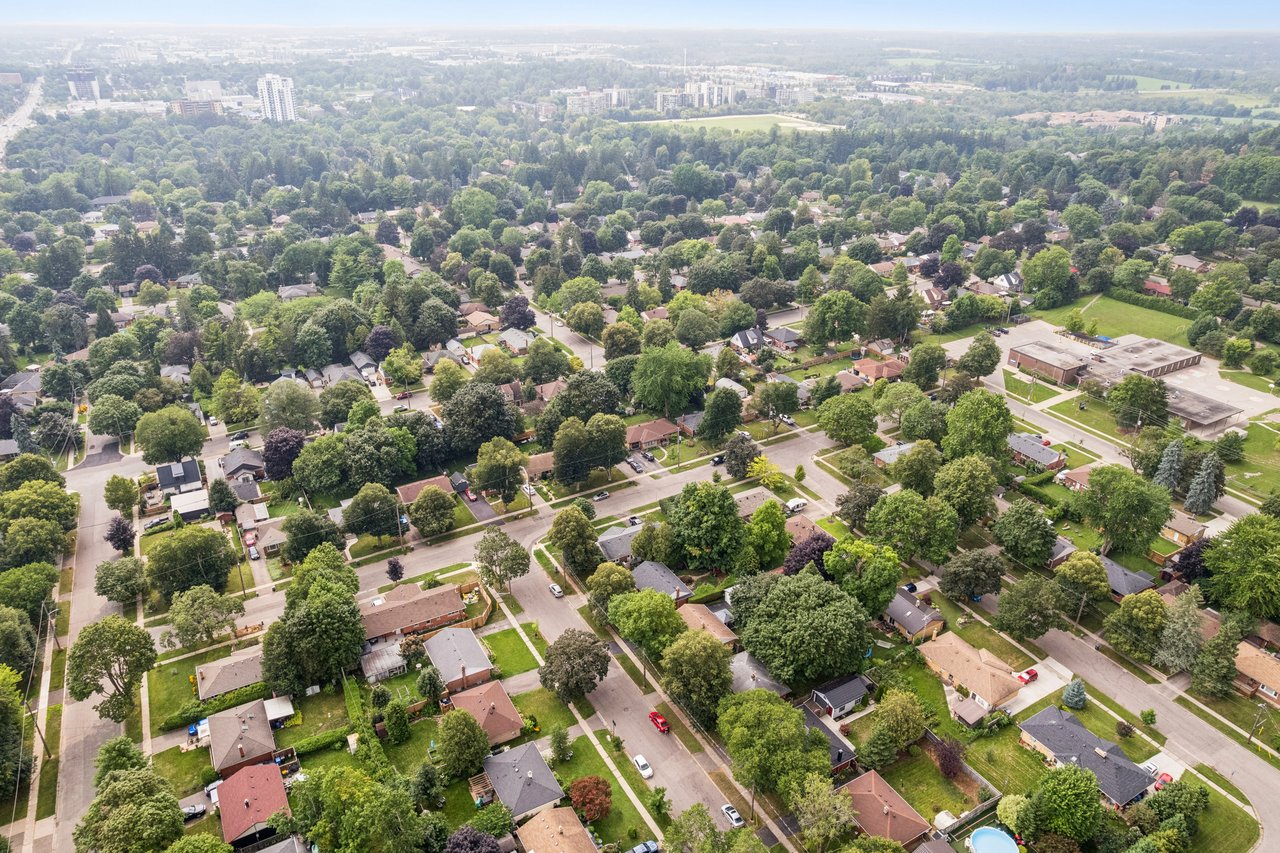
One of the biggest misconceptions in real estate is that there's one "Real Estate Market." There isn't.
What we call the market is actually dozens of smaller markets happening at the same time - all rolled into one citywide average. That makes for a great headline or news story, but it doesn't necessarily tell you what's happening with your home, on your street, at your price point.
That average sale price you see in the news? It's blending everything into one overall statistic, from student houses near the University of Guelph to century homes near downtown to larger properties on the outskirts of the city. Some homes may be selling quickly while others are sitting for weeks. Sometimes those properties are a 10-minute drive apart. Sometimes they're in the same neighbourhood!
So, what creates a micro-market?
Location - and we mean really specific location
Guelph is a great example of a city where buyers can have very specific preferences, and where moving just a few kilometres can put you into a very different real estate market.
Take Exhibition Park. A buyer looking here might be specifically drawn to the mature trees, character homes, walkability and proximity to downtown. That buyer isn't necessarily comparing a home there to a newer property in the South End simply because they're similarly priced and have the same number of bedrooms. To them, the neighbourhood itself may be one of the most important features of the home. Or consider Kortright Hills and Pineridge/Westminster Woods. They're both popular with families, but they can attract buyers looking for different things - larger established lots and access to trails versus newer schools and convenient South End amenities.
Even within one neighbourhood, the exact location matters. A quiet crescent, a premium lot backing onto greenspace, a court location, or a home directly across from a park can attract a different level of interest than a similar house on a busier road. Two houses can look nearly identical on paper and still appeal very differently to buyers once location comes into play. That's a micro-market within a micro-market.
Property type
Detached homes, townhomes and condos don't necessarily move together - even when they're located within a few blocks of one another.
Imagine a first-time buyer with a budget in the $500,000s. They may be comparing an older semi or townhouse in the East or West End with a newer stacked or condo townhouse in the South End. Their decisions are heavily influenced by monthly carrying costs, condo fees, renovation requirements, parking and how much competition exists at that particular price point. Meanwhile, a downsizer looking at a condo in Downtown Guelph is operating in a completely different market. They may care more about walkability, parking, elevator access and building amenities than lot size or school districts.
And then there's the University area, where a house that works particularly well for students or investors may be valued very differently than a similar-sized home elsewhere in the city. Proximity to campus, transit, bedroom count, parking, zoning and rental potential can all play a much bigger role in what buyers are willing to pay. Same city. Very different properties. Very different buyers.
Price point
This is one of the biggest reasons citywide statistics can be misleading.
A well-priced starter home might have a large pool of buyers watching for it. Move up a few hundred thousand dollars and suddenly the buyer pool may be significantly smaller - even if the overall Guelph statistics haven't changed. For example, a couple trying to get into the market under $700,000 may be competing with other first-time buyers and potentially investors. They may be willing to compromise on square footage, finishes or even location to get into a home that checks enough of their boxes.
A family shopping around $1 million may have a very different list. They could be looking for four bedrooms, a finished basement, a good school district, a larger yard and enough space to comfortably stay for the next 10 or 15 years. At $1.5 million+, the expectations change again. Buyers have more options and are often more selective about lot, finishes, layout, location and overall condition. A feature that might be considered a "nice-to-have" at one price point can become an expectation at another.
So when someone says, "Homes in Guelph are taking X days to sell," our next question is always: Which homes? In which neighbourhood? And at what price?
The buyer matters, too
Micro-markets aren't only about geography. They're also about who is shopping there and what matters most to them.
A young professional looking for a condo near the GO Station has a very different wish list from a family looking for a four-bedroom home in Kortright West. A University of Guelph parent buying a property for their student isn't necessarily looking at the same homes as a couple buying their first house. A downsizer leaving a larger home in St. George's might prioritize a bungalow or downtown condo where they can walk to restaurants and shops and spend less time maintaining a property. Someone relocating from the GTA may view Guelph pricing, lot sizes and commute times through a completely different lens than someone who has lived here for 20 years!
And that's why understanding who the likely buyer is for a property is such a big part of understanding its market. When we price and market a home, we're not simply asking what similar homes have sold for. We're also thinking about who is most likely to buy it - and what else that person can purchase with the same budget.
Schools, amenities and future development
These factors can create pockets of demand that don't necessarily show up in a citywide average.
For families, school catchments can narrow a home search down considerably. For commuters, access to Highway 6 or the 401 may matter more. For others, being able to walk downtown, hop on the GO Train, access nearby trails or get to the University quickly may be at the very top of the list. The same applies to everyday amenities. Being close to grocery stores, parks, restaurants, recreation centres and transit can make one pocket particularly desirable to a certain buyer, while another buyer may happily trade that convenience for a larger lot or quieter setting.
Future development matters, too. Buyers pay attention to what's being built nearby, where new amenities are going and how a neighbourhood may change over the next five or ten years. All of these things can influence demand.
Why the headlines only tell part of the story
You'll see headlines like:
"Guelph prices are up 5%."
"Inventory is rising."
"The market is cooling."
Those statistics can absolutely be useful. We look at them too. But they're the starting point, not the whole story.
If inventory is rising primarily in one property type or price bracket, that doesn't necessarily mean every Guelph seller suddenly has more competition. Likewise, a strong citywide average doesn't mean every neighbourhood or property type is experiencing the same level of demand. We can see two homes come to market the same week, just minutes apart, and have completely different outcomes. One might attract immediate interest and multiple offers while the other takes several weeks to find its buyer.
The difference could be price. It could be condition or presentation. It could be the lot, layout or updates. But it could also simply be that one property happens to sit in a particularly competitive little pocket of the market where there are more active buyers than available homes. That's the nuance that gets lost in a citywide statistic.
It's also why comparable sales matter so much
When we're trying to determine what a Guelph home is worth, we don't start and stop with the citywide average. We narrow the lens.
What has sold in the immediate neighbourhood? What was the property type? How similar was the lot? Was it renovated? Did it have a legal apartment? Did it back onto greenspace? Was it on a busy street or a quiet crescent? How long did it take to sell? Were there competing offers? What was available for sale when it hit the market? And, importantly, what else could that buyer have purchased at the same time?
Sometimes the most useful comparable isn't simply the house that's geographically closest. It's the home that was competing for the same buyer. If a buyer with $900,000 to spend was deciding between two properties in different Guelph neighbourhoods because both offered the same lifestyle, number of bedrooms and features, those homes may tell us more about one another than two neighbouring houses aimed at completely different buyers. That's an important distinction.
What does this mean if you're selling?
It means your pricing and marketing strategy shouldn't be based solely on what you've heard about "the Guelph market."
If entry-level detached homes in your neighbourhood are moving quickly but similar homes above a certain price point are sitting, we need to know that. If buyers looking in your area are particularly sensitive to renovations, we need to account for it. If several competing homes are coming to market at the same time, that matters too. And if your property has something that's genuinely difficult to replicate - a premium lot, legal apartment, walkability, greenspace, a great school location, extra parking or an unusual layout - we need to understand how much the right buyer is likely to value it.
The goal isn't simply to know what's happening in Guelph. It's to know what's happening in the small slice of the Guelph market that your home is actually competing in.
And if you're buying?
The same principle works in your favour.
A competitive market in one part of Guelph doesn't mean you need to panic everywhere. You might have very little negotiating power on a well-priced starter home in a high-demand pocket, but significantly more leverage on another property only a few minutes away. You may also find better value by looking just outside the neighbourhood or property type you initially had in mind. Sometimes changing the search by a few streets, a different style of home or even a relatively small jump in price can put you into a completely different competitive landscape.
Understanding those differences can help you recognize when it's worth moving quickly - and when you have room to negotiate.
Real estate is local. Sometimes hyper-local.
Citywide statistics are helpful for understanding the bigger picture, but your real estate decisions shouldn't be based on an average alone.
Guelph isn't one market. It's Old University. Downtown. Exhibition Park. Grange Road. Guelph-Eramosa. Kortright East, West, and Hills. Onward Willow. Pineridge/Westminster Woods. Puslinch. Riverside Park. St. George's Park. St. Patrick's Ward. Victoria North. Willow West. And dozens of smaller pockets within them.
Each has its own housing stock, buyer pool, inventory, price points and quirks. And within each of those areas, property type, street, condition and price can narrow the market even further. So if you're wondering what's happening with Guelph real estate, we'd argue there's a better question: What's happening in your Guelph market?
If you're curious about your neighbourhood, property type or price point, reach out. We're always happy to dig into the numbers and give you a clearer picture of what's actually happening - right where you live!