Ask most people why Kortright Hills sits at the top of Guelph's price tables and you'll get some version of the same answer: good schools, quiet streets, families want in. All true, and none of it explains the gap. Because on the one measure that usually drives a neighborhood premium, walkability, Kortright Hills should be a laggard, not a leader.
The area sits on the east side of the Hanlon Expressway, and reaching Stone Road Mall means crossing that highway on foot or relying on a car. That tradeoff shows up in how people actually get around: despite roughly 22 transit stops inside the neighborhood, only about 4 percent of working residents commute by public transit. Nearly everyone drives. If convenience were setting the price, Kortright Hills would be a value play, not the benchmark.
The Story Everyone Tells Doesn't Hold Up
Guelph's south end has plenty of neighborhoods built around the same logic: quiet subdivisions, family-sized lots, a longer drive to daily errands. Kortright East and Westminster Woods share that same footprint. What sets Kortright Hills apart isn't proximity to anything commercial. It's what happens right behind the fence line.
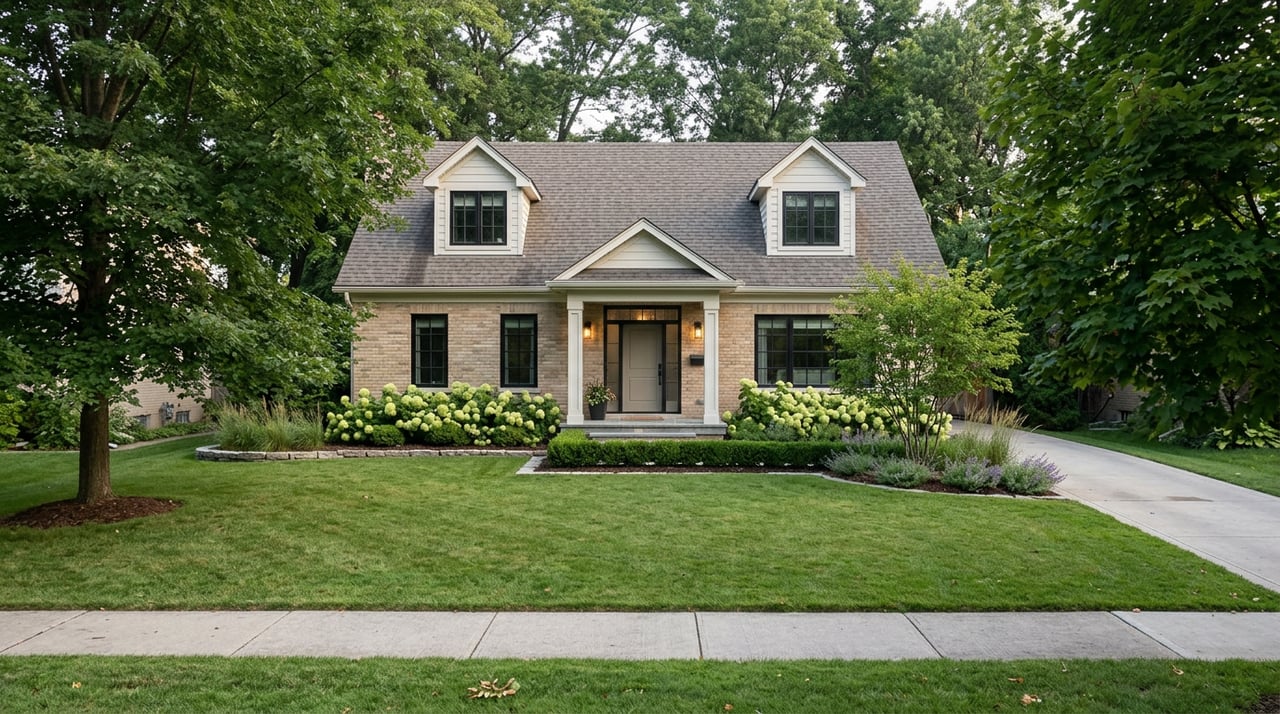
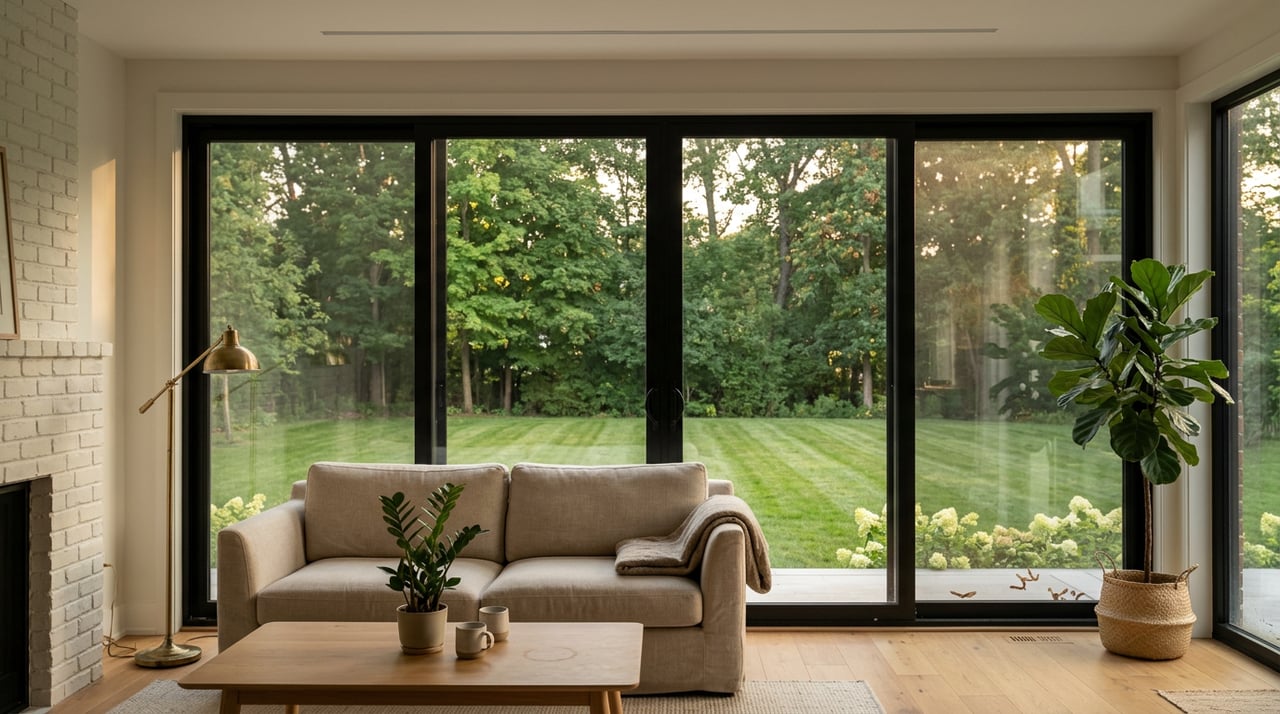
When the neighborhood was built in the 1980s, an unusual amount of the surrounding greenspace was preserved rather than paved. The result is a street pattern where a large share of homes back directly onto a park, a pond, or a forested edge instead of another driveway. That is a physical fact about how the lots were platted, and it does not show up in a walk score.
What the Price Data Actually Shows
Here is where the numbers get interesting, and a little messy, which is itself worth sitting with.
One neighborhood-level analysis of Guelph sales from January through June 2026, compared with the same six months in 2025, put Kortright Hills' average sale price at roughly $837,000, up about 5 percent year over year. A separate live snapshot of MLS activity during July 2026 showed the neighborhood's average list price closer to $953,000, with recent closed sales averaging near $1,147,498.
That is a wide spread for one neighborhood, and the explanation isn't mysterious once you look at inventory. At any given time, Kortright Hills typically has only 10 to 13 homes actively listed. In a pool that small, one large detached sale on a premium lot can pull the average up by six figures in a single reporting period. Small numbers move fast. That is not a red flag, it is just what a tight, low-turnover micro-market looks like, and it means any single average from Kortright Hills should be read as a range, not a fixed price tag.
For context, three different trackers pulled Guelph's citywide numbers in that same month of July 2026 and landed in three different places: one put the average sale price at $608,812, another at $757,680, and a third put the median at $725,000. Same city, same month, a spread of nearly $150,000 depending on the source and how it weights condos against detached homes. Even the "citywide" number is a moving target. Against that backdrop, Kortright Hills sitting anywhere from roughly 10 to 50 percent above the city average, depending on which snapshot you trust, is still a real and consistent premium. The question worth asking isn't whether the premium exists. It's what it's actually buying.
What Buyers Are Actually Paying For
Strip away the schools and the quiet streets, which plenty of Guelph neighborhoods can also claim, and the differentiator is land. Most Kortright Hills homes were built with three or more bedrooms, an attached garage, and a lot sized to back onto protected or maintained greenspace rather than a neighbor's yard. That is a supply constraint baked into the original subdivision plan from four decades ago. Nobody is platting new lots that back onto Hanlon Creek Park or Preservation Park. The inventory of homes with that specific feature is fixed, and in a city that keeps adding rowhouses and infill, fixed is worth something.
This is also why the walkability argument misses the point. Buyers here are not trading convenience for a shorter commute to shops. They are trading convenience for a green edge that cannot be replicated by a developer three subdivisions over.
The Green Edge Is Getting Bigger, Not Smaller
If the thesis is that Kortright Hills' premium rests on protected land at its back door, 2026 gave that thesis a boost. On January 23, 2026, the Grand River Conservation Authority and the City of Guelph jointly announced a plan to transfer roughly 126 acres of the former Niska Landholdings, land that sits at the confluence of Hanlon Creek and the Speed River, into public parkland. The GRCA board committed up to $350,000 from its master plans reserve fund toward trail construction and restoration work on the transferred parcels. At a follow-up board meeting on July 27, 2026, the GRCA declared a smaller 8-hectare agricultural parcel within the same landholding surplus and cleared it for sale, while the larger conservation parcels move toward the city.
None of that land sits inside Kortright Hills proper, but it sits along the same Hanlon Creek corridor that already defines the neighborhood's back-lot views, feeding the same trail network that runs through Hanlon Creek Park and Preservation Park. When a conservation authority is actively expanding the protected footprint next to a neighborhood rather than shrinking it, that is a structural tailwind for exactly the kind of premium Kortright Hills already commands. Green space that a city and a conservation authority are actively investing in tends not to become less scarce.
What This Means If You're Buying or Selling Here
If you're comparing Kortright Hills against other south-end Guelph neighborhoods, the honest framing is this: you are not shopping for a shorter walk to groceries. You are shopping for a lot that backs onto something permanent, in a pocket of the city where that kind of lot is not being made anymore.
A few practical notes worth carrying into a showing or a listing conversation:
- Homes here were built mainly in the 1980s, which means most are now 40-plus years old. Expect an inspection to turn up the usual items for a home of that age: roofing nearing replacement, an electrical panel that may need an upgrade, and aging mechanical systems. None of that is unique to Kortright Hills, but it's worth budgeting for separately from the price of the lot itself.
- With only a handful of homes on the market at any time, pricing strategy matters more here than in a higher-inventory neighborhood. A single comparable sale can skew perception of value in either direction, so a current, apples-to-apples read on recent closings matters more than a citywide average.
- If a lot backs onto Hanlon Creek Park, Preservation Park, or one of the neighborhood's ponds, that detail deserves to be front and center in a listing, not buried in the description. It's the actual asset being sold.
Kortright Hills doesn't sell a shorter walk to the mall. It sells a lot line that backs onto land a conservation authority just agreed to expand.
A Few Common Questions
Is Kortright Hills within walking distance of Stone Road Mall? Not comfortably. The neighborhood sits on the east side of the Hanlon Expressway, and reaching the mall on foot means crossing that highway. Most residents drive for daily errands.
Does the Niska Landholdings transfer add new trails inside Kortright Hills itself? The land being transferred sits along the Hanlon Creek corridor near Puslinch and western Guelph, not inside the Kortright Hills subdivision boundary. It feeds the same broader trail network that already connects to Hanlon Creek Park and Preservation Park.
Are Kortright Hills homes older than other south-end neighborhoods? Generally, yes. Most were built in the 1980s, roughly a decade or more before newer south-end subdivisions like parts of Westminster Woods and Kortright East, which affects what an inspection is likely to flag.
If you're weighing Kortright Hills against another Guelph neighborhood, or trying to figure out whether a specific lot's backing feature is worth the asking price, that's exactly the kind of local read Andra Arnold and her team spend their days on. Reach out, and let's look at the actual comparables together before you decide.