If you've been watching Guelph home prices this year, you've probably noticed something odd about St. Patrick's Ward. While St. George's Park posted a double-digit jump in average sale price during the first half of 2026, the Ward's average barely twitched. Guelph-wide MLS data covering January through June 2026 put the Ward's average sale price at $614,644, down 1.3% from the same period a year earlier. Meanwhile St. George's Park, just up the bluff to the north, climbed roughly 10% to an average near $960,000.
A flat number like that usually gets read one way: demand cooled. But that reading misses what's actually happening inside the Ward's boundaries, and it's worth understanding before you compare a Ward listing to anything else on your shortlist.
The Ward Is Two Housing Markets Wearing One Name
St. Patrick's Ward, the area locals call simply "the Ward," sits east of downtown between York Road and Elizabeth Street, bounded by Stevenson Street and the Speed River, according to the Guelph Heritage Society. The irregular street grid you'll notice if you walk it isn't an accident. It's a leftover from early surveyors working around the terrain and, more importantly, around the factories that used to anchor the neighbourhood.
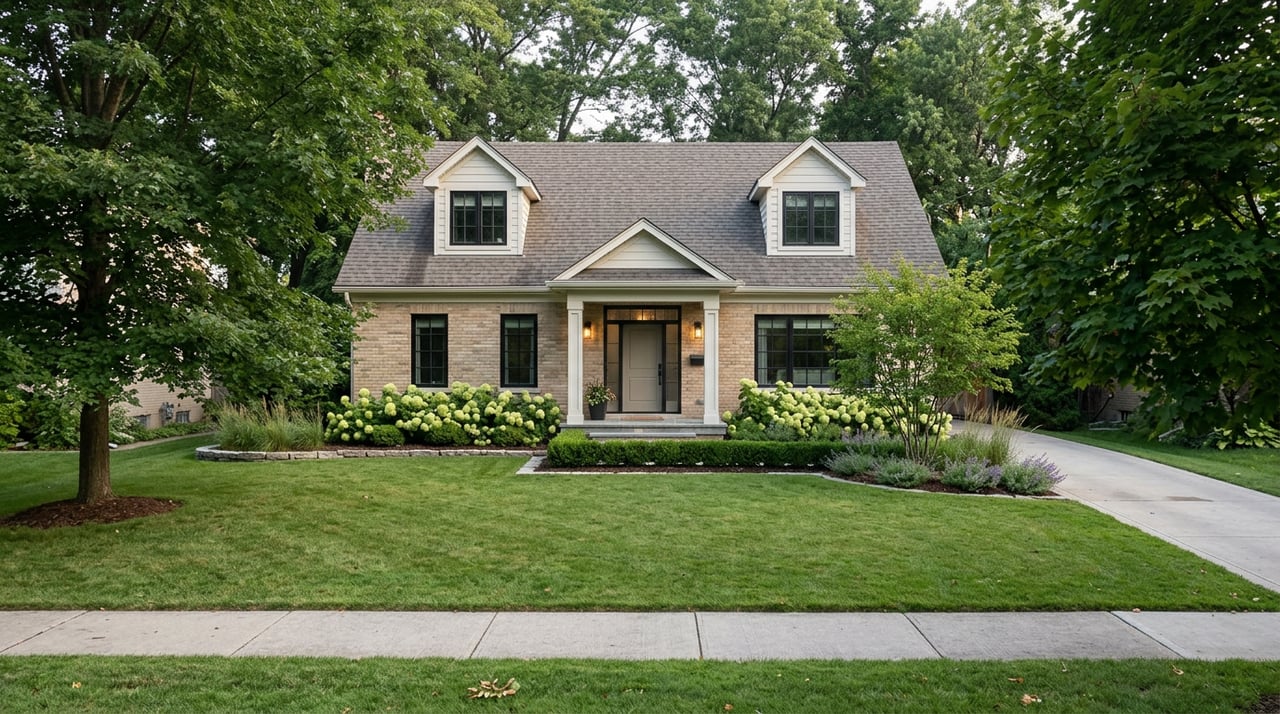
That industrial layout matters here because it explains why the Ward's MLS boundary now contains two products that have almost nothing in common except a shared postal code. On one side you have the original housing stock: modest cottages and post-war bungalows built for the workers at the mills and plants that once lined the Speed River, many of them still standing on streets like Ferguson Street. On the other side, you have several hundred new condo units that didn't exist a decade ago, built on the footprint of the same factories those workers used to walk to.
When you average the sale prices of both under one neighbourhood label, you're not measuring one market. You're measuring two markets moving at different speeds and calling the blend a trend.
What Used to Make Lawn Mowers Now Makes Condos
The clearest example sits at 5 and 93 Arthur Street South. That stretch of riverside land was once home to Allan's Mill, one of Guelph's earliest grist mills, later expanded into a distillery in the 1850s before fire damage pushed it toward manufacturing use, per Wikipedia's history of Guelph. Over the following century the site cycled through several industrial tenants, eventually producing metal goods, which is where the name for the current development comes from.
Today that land holds the Metalworks community, a group of condo buildings built by Fusion Homes that together add up to just over 600 residential units. The original Metalworks tower at 5 Arthur Street South sold out its inventory in April 2026. Its later companion, Anthem at the Metalworks, a 14-storey building at 93 Arthur Street South with roughly 193 suites ranging from 535 to 1,350 square feet, added another wave of supply on the same block. Add the Copper Club and the Studio buildings and you're looking at one of the largest single blocks of new housing supply Guelph's downtown core has absorbed in one place, all inside the same neighbourhood boundary as cottages and post-war bungalows that predate any of it by generations.
The same site that once housed Allan's Mill and later a distillery now hosts both: the Spring Mill Distillery and its Ward Bar reopened on that historic footprint in 2019, sitting at street level beneath hundreds of condo units above. It's a rare case where you can stand in one spot and see the entire arc of the neighbourhood's economics, from grist mill to factory to condo tower, without moving your feet.
Old Stock and New Stock, Side by Side
Here's what that split actually looks like when you break it apart:
| Original Ward Housing Stock | Metalworks-Era Condos | |
|---|---|---|
| Typical build era | 1870s to 1950s, mostly post-war | 2015 to 2025 |
| Typical form | Detached cottages, bungalows, small rowhouses | High-rise and mid-rise condo suites |
| What's driving price | Limited supply, character, walkability to downtown | Steady new-unit delivery, investor and rental demand |
| Recent trajectory | Competing directly with detached stock in nearby neighbourhoods | Pricing tied to construction costs and unit size, not lot value |
Detached character homes in the Ward aren't competing against condo suites for buyers. A young family looking at a three-bedroom cottage on Ferguson Street and an investor looking at a one-bedroom unit in Anthem at the Metalworks are shopping in entirely different markets, even though both listings will show up under the same neighbourhood name on a search.
Why the Average Went Sideways Instead of Up or Down
This is the part that explains the flat number. When a large batch of new condo inventory gets delivered into a small neighbourhood over a short window, as happened here with the Metalworks buildings completing and selling out in stages through early 2026, it changes the mix of what's actually selling, not just the count. If a good share of the Ward's transactions in early 2026 were condo closings at a lower price point per unit than the neighbourhood's detached homes, that alone can hold the blended average steady even if the older housing stock is quietly holding or gaining value on its own.
In other words, a flat average in a neighbourhood with heavy new-construction delivery doesn't necessarily mean nothing is happening. It can mean the mix of what's selling shifted underneath the number.
What Happens Now That the Cranes Have Mostly Stopped
With the original Metalworks tower sold out as of this spring and its companion buildings largely built out, the wave of net-new condo supply that's been feeding into the Ward's sales mix for the past several years is winding down. That matters for anyone trying to read this neighbourhood's numbers going forward. As new-unit closings taper off, the Ward's reported average should start reflecting resale activity more heavily, both resale condos and the older detached stock, rather than a mix skewed by first-time closings on brand-new units.
If the Ward's average starts moving more noticeably in either direction over the next few reporting periods, that's likely a real signal rather than a supply artifact. Worth watching if you're timing a purchase or sale in this part of Guelph.
Ask Which Ward You're Buying Into
If you're comparing a Ward listing against something in a neighbourhood like St. George's Park or Kortright Hills, the neighbourhood-level average price is close to useless on its own. What matters is which side of the Ward's split market the specific listing sits on.
A century-old cottage near Lyon Park is going to behave like the rest of Guelph's limited, walkable, close-to-downtown detached stock. It will compete on lot size, character, and proximity to the Eramosa River Trail, not on anything related to condo construction cycles. A resale unit inside the Metalworks community will behave more like a condo anywhere in Ontario, tied to maintenance fees, building amenities, and how many similar units are on the market at once.
Knowing which market you're actually in before you make an offer, or before you list, is the difference between reading a headline number and understanding what you're buying.
A Few Common Questions
Is St. Patrick's Ward a good place to buy right now? It depends heavily on which product you're looking at. Character homes in the Ward remain in limited supply and continue to compete with similar stock closer to downtown. Condo resale activity in the Metalworks buildings will move more in line with broader Guelph condo trends now that the initial construction wave has ended.
Why do some listings call this neighbourhood "Two Rivers" instead of "St. Patrick's Ward"? Both names refer to the same area. The Speed and Eramosa Rivers both run through the neighbourhood, and "Two Rivers" has become a common rebrand used alongside the historic St. Patrick's Ward name.
Will prices in the Ward start climbing now that the Metalworks tower has sold out? There's no way to promise that, but the mechanism that's been holding the average flat, a steady stream of new-unit closings at a different price point, is fading as that first wave of construction finishes selling through. That means future numbers should reflect actual resale demand more directly than they have over the past few years.
If you're weighing a move into St. Patrick's Ward, whether it's a character home near Ferguson Street or a resale unit inside the Metalworks community, Andra Arnold and her team can walk you through what a specific listing is actually competing against, not just what the neighbourhood average says. Contact us to talk through your options.