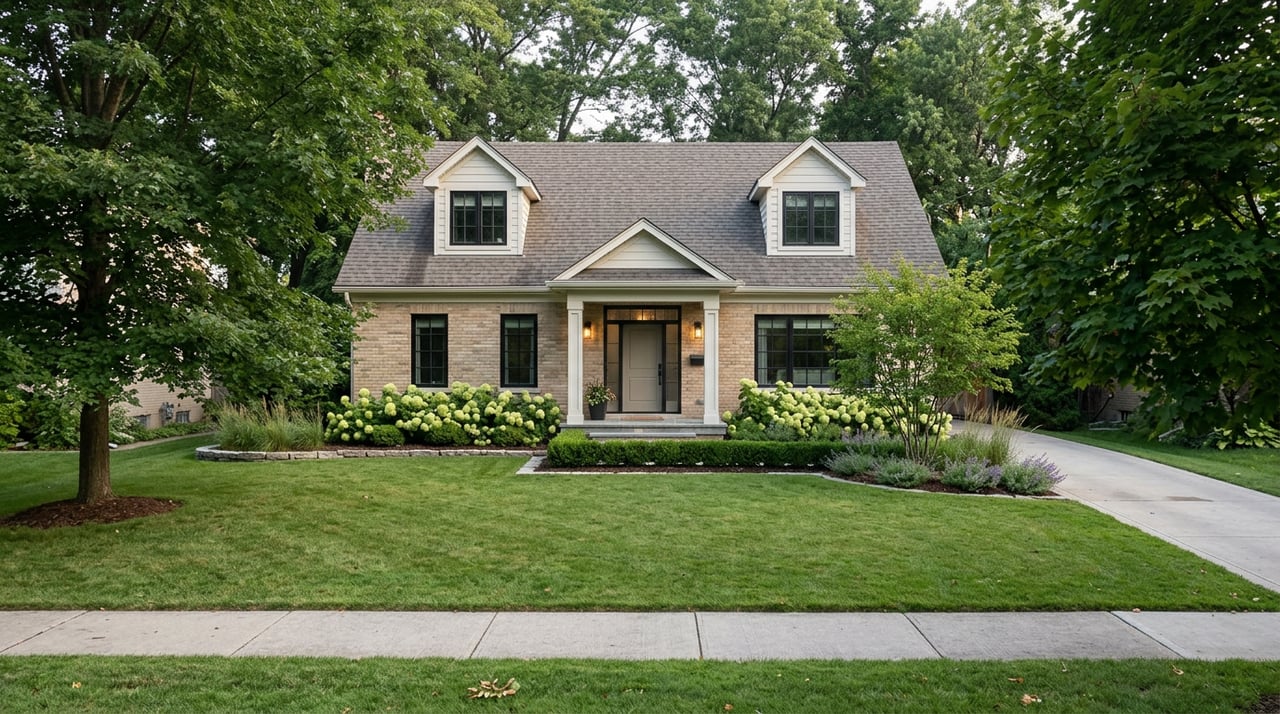
Pull up the legal description on a property in Pine Ridge, and you might find a line that reads something like this: title to the lot, together with an undivided common interest in a Common Elements Condominium Corporation. One property on Spencer Crescent carries an interest in Wellington Common Elements Condominium Corporation No. 112. Nothing about the house itself looks like a condo. It has a driveway, a yard, a front door that opens straight onto the street. But legally, that second clause changes the entire transaction.
This is the piece that catches Guelph buyers off guard when they're shopping in Pine Ridge or Westminster Woods. The listing photos, the layout, even the MLS category can say detached or townhome. The paperwork says something else. And the paperwork is what determines which offer form you sign, what your lawyer has to order before you can safely waive conditions, and how a lender counts your monthly fee against your mortgage.
Why So Much of This Neighbourhood Works This Way
Pine Ridge and Westminster Woods were built around a structure that's still uncommon in most of Guelph: homeowners hold freehold title to their house and lot, but a separate Common Elements Condominium Corporation owns and maintains the shared roads, trails, entrance features, and green space that stitch the two communities together. You get the feel of owning a standalone home. You also get an automatic, non-optional share in a corporation you didn't choose and can't opt out of.
That structure is what lets these two subdivisions maintain the kind of connected trail network and consistent streetscape that shows up in how people describe daily life there. It's also why a transaction here isn't quite the same as buying a fully freehold home a few streets over in a neighbourhood without a common elements corporation attached.
The Offer Form Changes Before You Even Get to Conditions
In a standard Ontario resale transaction, your agent drafts an Agreement of Purchase and Sale on the usual form. When a property carries a Parcel of Tied Land interest, the correct form is OREA Form 111, built specifically for POTL purchases. It asks for the legal name of the condominium corporation and the current monthly common element fee up front, in the body of the offer.
If your agent or lawyer catches this early, the next step is automatic: order the status certificate for that Common Elements Condominium Corporation, not just a general property search. Skip that step, or treat the property as a routine freehold purchase, and you can end up waiving your conditions without ever seeing the one document that would have told you whether the corporation is financially healthy.
What a Status Certificate Actually Puts in Front of You
A status certificate for a Common Elements Condominium Corporation isn't a formality. Under the Condominium Act, the corporation is legally required to include specific information: the current budget, the audited financial statements, the state of the reserve fund, whether the unit is in arrears, and any planned increases to common expenses. The Condominium Authority of Ontario confirms that the corporation must provide this package within 10 days of a request, and the fee it can charge is capped at $100 including tax.
Here's the part that matters most for a POTL buyer specifically. The reserve fund tells you whether the corporation has been collecting enough to cover the eventual repaving of shared roads, repairs to entrance features, or restoration work on shared trails and green space, without hitting every owner with a surprise bill. If that fund is thin, a special assessment can land on your desk within your first year of ownership, and it's registered against your unit the same way a condo fee shortfall would be.
The Timeline That Actually Catches People
The corporation has 10 calendar days to produce the certificate once it's requested and paid for. Most purchase agreements then give the buyer's lawyer a separate window, typically a handful of business days, to review it and confirm the condition is satisfied. These two clocks run separately, and the review clock doesn't start until the documents are actually in hand.
That means the worst way to handle a POTL purchase in Pine Ridge or Westminster Woods is to order the certificate late in your condition period and hope it arrives in time. The better sequence, and the one experienced Guelph lawyers recommend, is to request the certificate the moment your offer is accepted, so your lawyer has the full review window rather than a rushed few days at the end.
What Your Mortgage Lender Does With the Fee
There's a detail buyers rarely think to ask about until it's already affected their pre-approval. Lenders treat a POTL common element fee exactly the way they treat a condo fee. It gets included in full in both Gross Debt Service and Total Debt Service calculations, the two ratios lenders use to determine how much house you can carry. A fee in the range mortgage professionals typically cite for Ontario POTLs, roughly $50 to $200 a month depending on what the corporation maintains, can be enough to shift your file to a different lender tier or trim your maximum approved mortgage.
If you're comparing a Pine Ridge property against a fully freehold listing in another south Guelph neighbourhood with a similar list price, that monthly fee is not a rounding error in your affordability math. It's a line your lender is already accounting for, whether or not you asked about it first.
The Certificate Isn't a Second Chance Later
One more reason to take the review seriously before you waive conditions: the Condominium Act binds the corporation to what the status certificate says at the time it's issued, but there's no built-in penalty if that certificate later turns out to have been wrong, and no automatic right to unwind your purchase after closing because of it. The protection is in the review itself, done by someone who knows what to look for, during your condition period. Once you've closed, the leverage you had to negotiate a price adjustment or walk away is gone.
Comparing the Three Structures Side by Side
| Standard Freehold | POTL (Common Elements Condo) | Standard Condominium | |
|---|---|---|---|
| What you own | House and lot outright | House and lot, plus a mandatory share in a separate Common Elements Condominium Corporation | An individual unit plus a share of the building's common elements |
| Monthly fee | None beyond taxes and utilities | Common expense fee for shared roads, trails, and entrance features | Common expense fee for building upkeep, generally higher |
| Offer form | Standard Agreement of Purchase and Sale | OREA Form 111 | Standard APS with a condo schedule |
| Status certificate required | No | Yes, for the Common Elements Condominium Corporation | Yes, for the building's condo corporation |
| Lender treatment of the fee | Not applicable | Counted in full toward GDS and TDS, same as a condo fee | Counted in full toward GDS and TDS |
What to Do Before You Waive Conditions
If you're actively writing an offer in Pine Ridge or Westminster Woods, a few steps protect you:
- Ask directly whether the property carries a POTL interest before you submit an offer, not after. Your agent can check the legal description and MLS remarks, which are supposed to disclose the condominium corporation's name and monthly fee.
- If it does, confirm the offer is drafted on Form 111 and that a status certificate condition is built in, with enough business days for your lawyer to actually review the documents once they arrive.
- Request the certificate the day your offer is accepted rather than waiting.
- Ask your lawyer specifically about the reserve fund's funding level, any pending special assessments, and whether the unit is current on its common expenses.
- Tell your mortgage lender about the fee early in the pre-approval process so it's reflected in your real borrowing capacity, not discovered during underwriting.
A Few Common Questions
Does every home in Pine Ridge and Westminster Woods have a POTL? Not every single property, but the common elements condominium structure is widespread across both communities. Confirm it individually for any home you're considering rather than assuming either way.
How do I find out if a specific listing has one? The legal description on title will reference an undivided common interest in a named Common Elements Condominium Corporation. Your agent or lawyer can confirm this before you write an offer.
Does the buyer or seller pay for the status certificate? There's no fixed rule under the Act. In practice, sellers sometimes order it ahead of listing to speed up a sale, while buyers cover it themselves in other cases. It's worth clarifying in your offer.
Can the monthly fee change after I move in? Yes. The corporation's board sets the budget annually, and fees can rise with maintenance costs. Any increase already declared has to appear in the status certificate you review before closing.
If you're weighing a home in Pine Ridge or Westminster Woods against something fully freehold elsewhere in south Guelph, this is exactly the kind of detail that belongs in the conversation before you write an offer, not after. If you'd like to talk through what a specific listing's legal description actually means for your closing, Andra Arnold and her team are here to help.